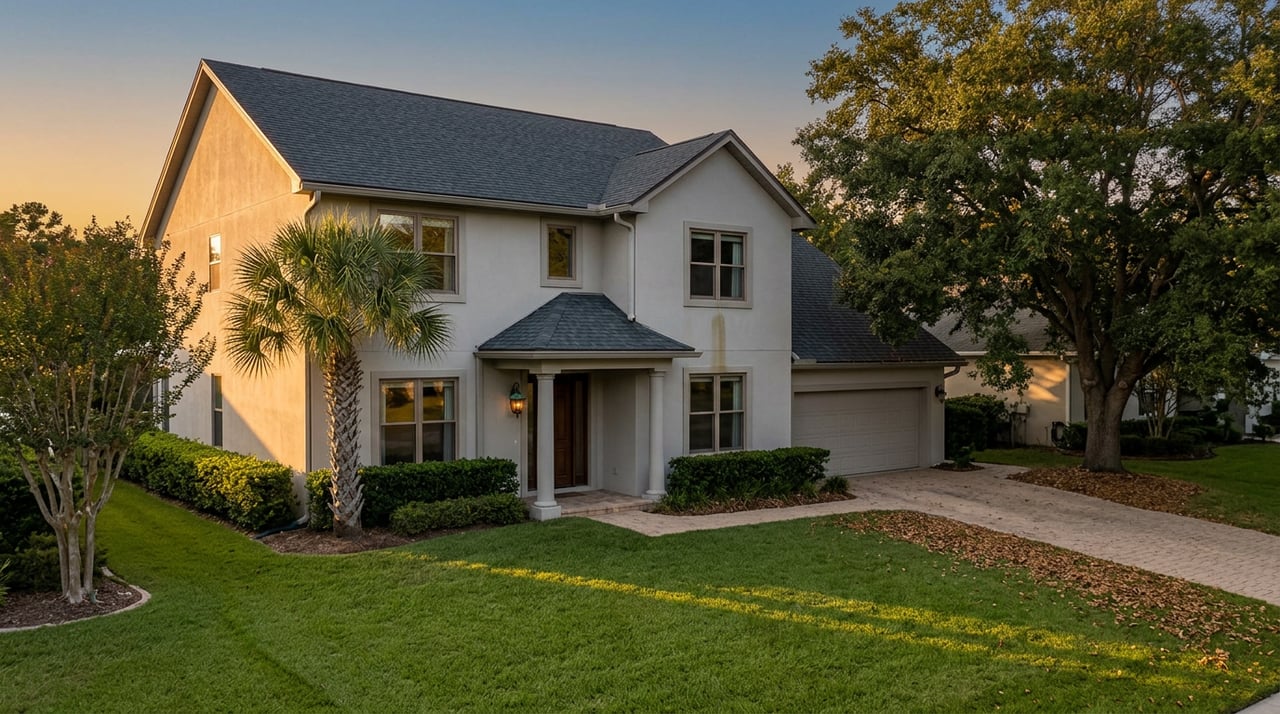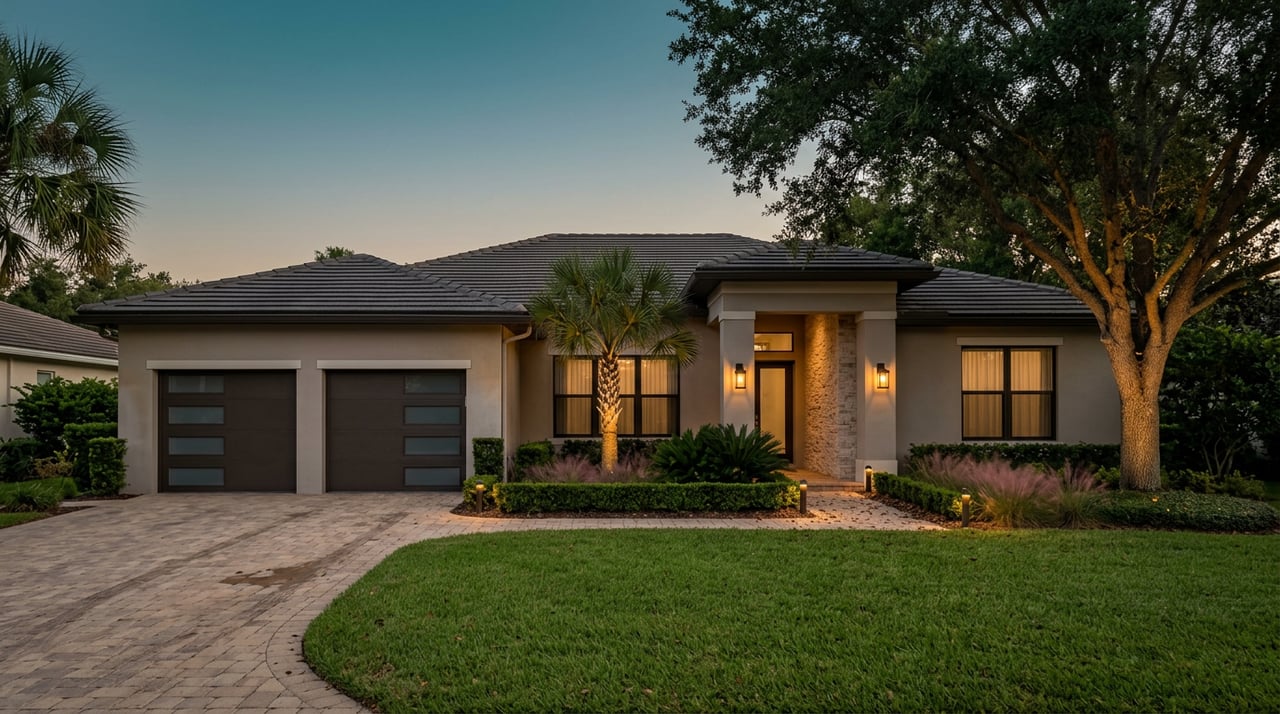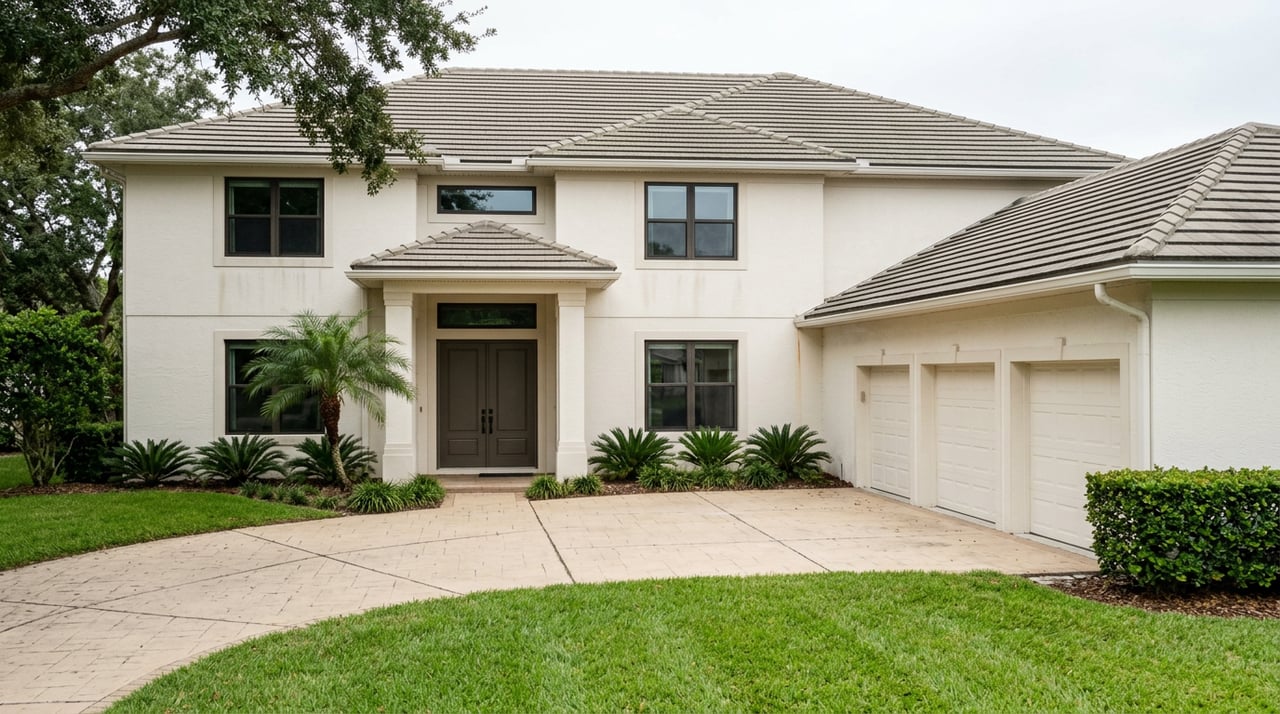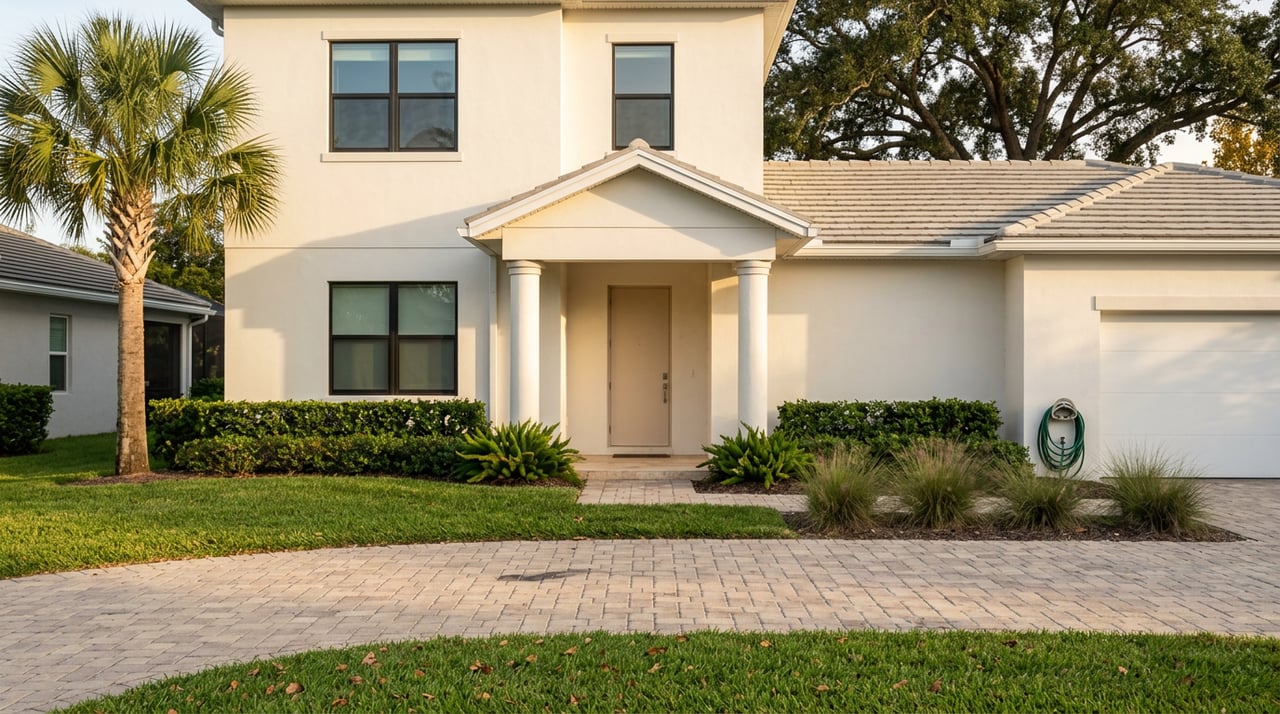
Two homes list at nearly the same price in Mirada this summer. Same square footage range, similar age, comparable builder finish level. Pull the fee sheets on both and the numbers stop lining up. One buyer is looking at roughly $260 a month in community fees before a mortgage payment ever enters the picture. The other is looking at more than $800. Same neighborhood name on the entry sign. Different math underneath it.
That gap is not a mistake on a listing sheet. It is built into how Mirada financed itself and how Florida law lets master-planned communities pay for their own roads, gates, and amenities. If you are comparing homes here against anything else in Pasco County, the price on the sign is the least useful number in the packet.
The Stack Nobody Explains at the Open House
Mirada is not one fee structure wearing one name. It is a roughly 2,000-acre community built by multiple builders across multiple phases, and each phase carries its own layered bill. A buyer here can face a master homeowners association fee, a separate village-level HOA on top of it, a Community Development District assessment, and a lagoon membership charge that is billed apart from all three.
The district financing piece is the one most buyers have never dealt with before. In Mirada, that authority sits with the Mirada Community Development District, a local special-purpose government created under Florida law to build and maintain shared infrastructure. The district pays for that work by selling tax-exempt bonds, and it recovers the money through a non-ad valorem assessment that shows up as a line item on the annual property tax bill, not as a separate invoice you can ignore.
That CDD line item is really two numbers stitched together. One part repays the bond principal and interest used to build the roads and common areas, typically amortized over about 30 years and payable off early if a homeowner chooses. The other part covers ongoing operations and maintenance, and that portion can move up or down every year depending on the district's public budget process. A buyer reading a single "CDD fee" figure on a listing is usually seeing both pieces blended into one number, without knowing which part is temporary debt and which part is a permanent operating cost.
Four Sections, Four Different Bills
Here is what that looks like in practice, using figures published by the builders currently active in Mirada and the district's own adopted assessment table for fiscal year 2026.
| Section / builder | Monthly HOA | Annual CDD | Combined HOA + CDD (monthly) | Lagoon fee |
|---|---|---|---|---|
| D.R. Horton (Villas through 60-foot lots) | $83 | $2,113 to $3,672 | $259 to $389 | About $38/month, billed separately |
| Ryan Homes townhomes | $357 | About $1,740 | $502 | Confirm per contract, varies by plan |
| Lennar Estates (60-foot lots) | $559 | $3,443 | $846 | About $35/month, billed separately |
| Maronda townhomes | About $300 (estimated) | About $1,500 (estimated) | About $425 | About $35/month, billed separately |
Every one of those combinations sits under the same community name and, in several cases, the same rough price band. The spread between the cheapest and most expensive combined monthly bill in that table is more than $500. None of that shows up in the headline sale price. It shows up in the closing disclosure and on the tax bill that follows.
The One Section That Skips the Bond
There is one part of Mirada that breaks the pattern entirely. Medley at Mirada, the gated 55-plus section that began building in 2021, is reported to carry no CDD bond at all. That is a structural difference, not a discount. It means residents there are not repaying construction debt through their tax bill the way newer sections are, which local market estimates put at roughly $25,000 in avoided carrying cost over a decade compared with a newer phase carrying a full bond assessment.
That difference matters most for buyers weighing an older, established section against a brand-new phase still under construction. A newer home might come with modern finishes and a lower up-front price, but if it sits inside a phase still paying off original infrastructure bonds, the monthly cost of owning it can run well above a comparable older home that has none of that debt attached.
Builders have priced homes across the Mirada footprint from the high $200,000s for townhomes up to the mid $500,000s for larger single-family plans in recent listings. Across the wider Stellar MLS coverage area, which includes Pasco County, the second quarter of 2026 put single-family median prices around $400,000 regionally. Neither number tells you anything about which fee stack you are walking into. Only the parcel-specific paperwork does that.
Why the Growth Keeps Coming
None of this fee complexity is an accident of one overbuilt community. Mirada sits inside a cluster of connected, technology-branded developments spreading along Interstate 75 and State Road 52 in northern Pasco County. Epperson, a few miles away, built its own smaller lagoon around the same concept. Angeline, further west, is anchored by a life sciences campus tied to Moffitt Cancer Center and is planned to eventually house more than 30,000 residents.
Three miles from Mirada, a 965-acre mixed-use project broke ground in October 2023 under the name DoubleBranch, previously known as Pasco Town Center. The developer, Columnar, a Traylor Capital company, is building it out with a projected 3,500 housing units, 725,000 square feet of office space, and roughly 6,000 jobs once complete, according to coverage of the groundbreaking. County planning material has pointed to a build-out timeline stretching toward the end of the decade.
That is the actual demand engine behind rising interest in San Antonio, FL. Every new phase that gets built at Mirada, and every new development that gets approved nearby, means a new bond issuance and a new fee structure entering the mix. A fee comparison done today will likely look different again in two or three years, simply because the district keeps growing.
What This Means If You're Comparing Homes Right Now
Compare the total monthly bill, not the price on the sign. That single habit will save more money over a decade than almost any negotiation tactic.
Before you write an offer inside Mirada, or use it as a benchmark against another San Antonio or Wesley Chapel community, get four things in writing. Ask for the parcel-specific CDD assessment letter and the current adopted district budget rather than relying on a builder's website estimate, since those figures shift by lot width and bond series even within the same phase. Confirm whether your lot answers only to the master HOA or to a village-level HOA layered on top of it. Get the lagoon membership terms in writing, since some HOA packages bundle it and others bill it apart. And ask whether the bond portion of your CDD assessment can be prepaid, along with the current payoff figure, since retiring that debt early can simplify your ownership cost and your eventual resale story.
None of that is a reason to avoid Mirada. The lagoon, the Publix-anchored shopping center at its center, and restaurants like Tasty Tokyo and The Hungry Greek have made it a real draw, not just a marketing pitch. It is a reason to read the fee stack the same way you would read an inspection report, line by line, before you commit. If you want the fuller picture on what else is being built across San Antonio's new construction map right now, our guide to new communities and construction in San Antonio, Florida walks through the rest of the pipeline.
A Few Straight Answers
Does every home in Mirada include lagoon access? No. Some HOA packages bundle it into the monthly dues, and others bill it separately, generally in the $30 to $50 a month range based on published community fee sheets. Confirm the terms in writing before you write an offer.
Can I pay off my CDD bond assessment early? Usually yes. The bond portion is a repayment schedule tied to the infrastructure that was built, not a permanent fee, and many districts allow a lump-sum payoff that removes future bond payments from the tax bill. Ask your title company to pull the current payoff figure during your due diligence period.
Will CDD fees go down over time? The operations and maintenance portion can move up or down each year based on the district's public budget process. The bond portion stays roughly flat until it is paid off in full, at which point it disappears from the bill entirely.
Fee stacks like this are exactly where a deal gets won or lost before anyone even talks about the purchase price. If you are weighing a home in Mirada against something else in San Antonio, Wesley Chapel, or anywhere across Pasco, Hillsborough, Pinellas, or Hernando counties, Alicia Chapman will walk the full fee stack with you line by line before you sign anything. Schedule Your Strategy Call and get the numbers straight first.